Post-Launch Evaluation & Data Analysis Framework
Kontent.ai
Systematic framework for measuring feature success after launch – combining quantitative analytics with qualitative research.
🎯 The Challenge
Teams were shipping features without systematic post-launch evaluation, missing opportunities to learn from real usage, identify struggling users, and make evidence-based improvement decisions.
🔧 What I Built
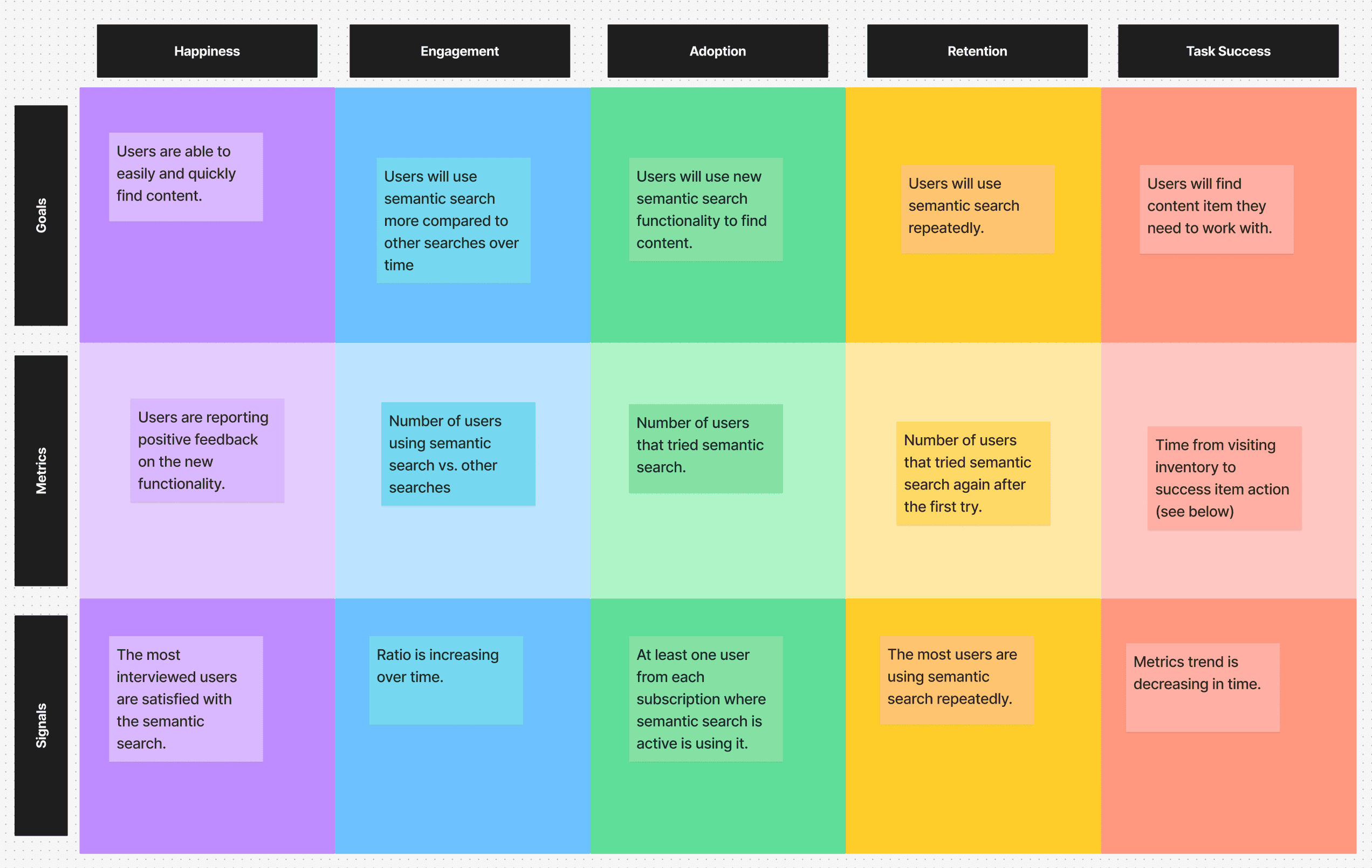
Post-launch evaluation framework using adapted HEART metrics (Activation, Adoption, Stickiness, Task Success) with reusable Amplitude dashboard templates.
📋 Process Established
Five-step process for systematic feature evaluation.
- Define metrics before launch – What does success look like?
- Set up tracking – Consistent event taxonomy in Amplitude
- Create dashboards – Ongoing monitoring templates
- Combine with qualitative research – User interviews, CSM feedback
- Identify outliers – Power users to learn from, drop-offs to investigate
📊 Metrics Framework
Adapted HEART metrics for feature evaluation.
- Activation – Who discovered and enabled the feature?
- Adoption – Who tried it? Who kept using it? How does it compare to alternatives?
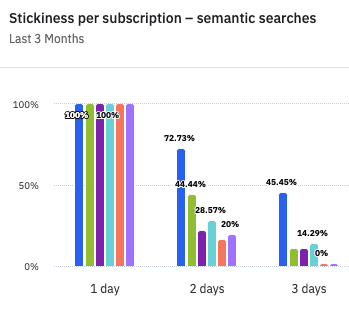
- Stickiness – How often do users return? Daily/weekly engagement patterns
- Task Success – Does the feature help users achieve goals faster?
🎛 Amplitude Dashboard Template
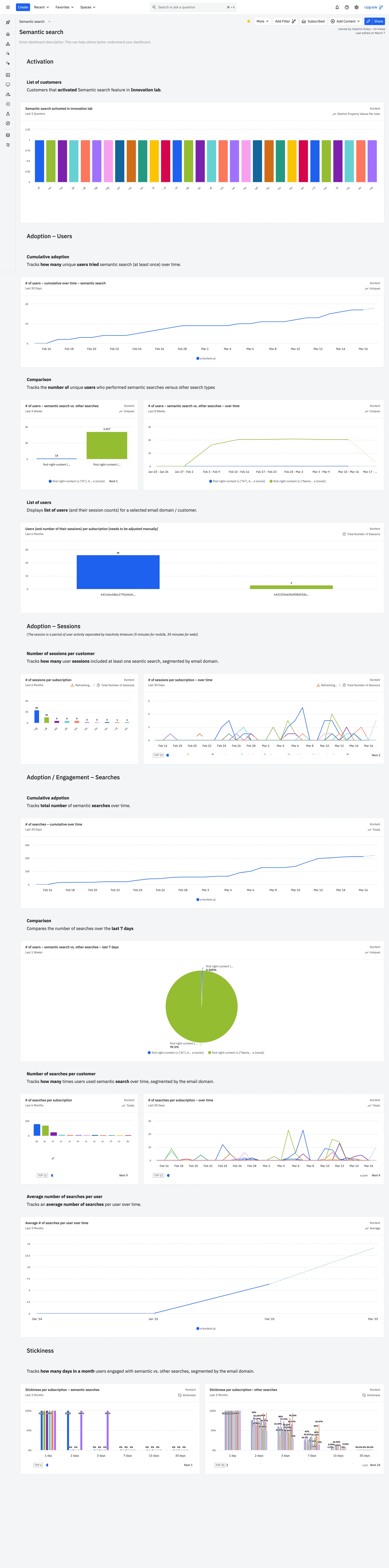
Created reusable dashboard structure tracking:
- Cumulative adoption (unique users over time)
- Usage comparison (new feature vs existing alternatives)
- Per-customer breakdown (by email domain)
- Session and search frequency trends
- Average usage per user
✅ Applied Example: Semantic Search
Full post-launch evaluation for Semantic Search early access.
- Tracked activation through Innovation Lab
- Measured adoption comparing semantic vs keyword search
- Identified top-engaging customers for interviews
- Combined Amplitude with Metabase for task success metrics (time to find content)
- Fed findings back into design iterations
📚 Knowledge Transfer
Shared methodology with design team so post-launch evaluation becomes standard practice across all feature releases.
🌊 Impact
The framework shifts team culture from "ship and forget" to continuous learning, enabling evidence-based iteration decisions and helping identify features that need rescue vs. those ready for broader rollout.