AI Auditing
Kontent.ai
Audit and tracking system design for AI actions in enterprise CMS – implementing the Accountability principle from the Responsible AI Framework to provide clear visibility into AI vs. human actions.
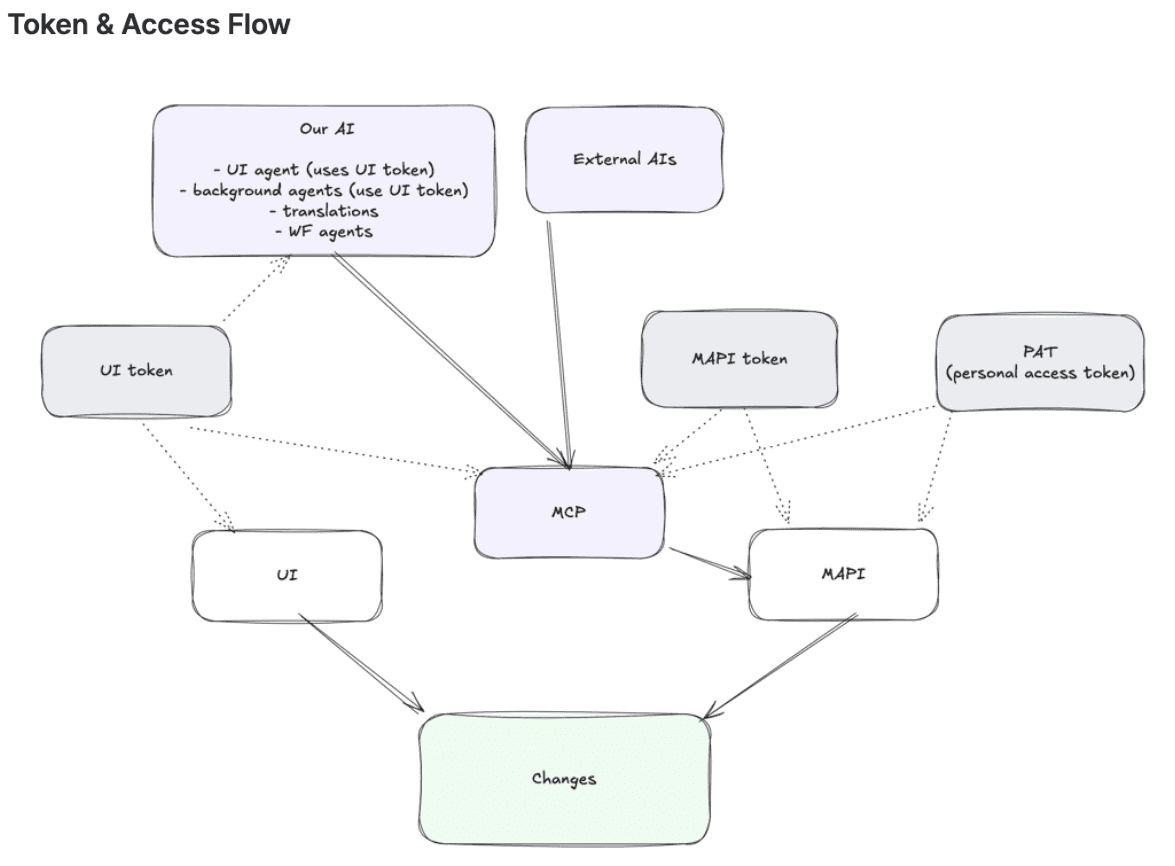
📋 Context
Implementation of the Accountability principle defined in Responsible AI Framework. Users and administrators need clear visibility into what actions were performed by AI agents versus human users.
🧩 Key Design Challenge
Multi-source information flow from various AI integration points.
- External AI integrations (third-party LLMs via API)
- Internal AI features (Ask AI, WYSIWYG AI)
- Our own AI Agent
- Workflow Agents (automated triggers)
💡 Proposed Design Solutions
Phased approach to implementing AI auditing capabilities.
- V1 - Audit Log Enhancement – Expand 'Source' field with values like 'AI Agent' or 'MCP'
- V1 - Version History Update – Add 'on behalf' information showing which agent made changes
- V1 - Extended Filters – Add AI-specific filter to audit log
- V2 - Unified View – Include version history information directly in audit log
- V2 - Content Items Filter – Enable filtering by content item changes
❓ Open Questions
Design decisions requiring further exploration and stakeholder input.
- How to track external LLM usage transparently?
- Should internal AI features (Ask AI) be distinguished separately from AI Agent?
- Workflow Agents: Who gets attribution when trigger person ≠ configuration person?
- How to handle approved AI suggestions (user approved = user action?)
🌊 Impact
Proper AI auditing builds trust in AI-powered features for enterprise customers with strict compliance requirements, making AI adoption viable for regulated industries.